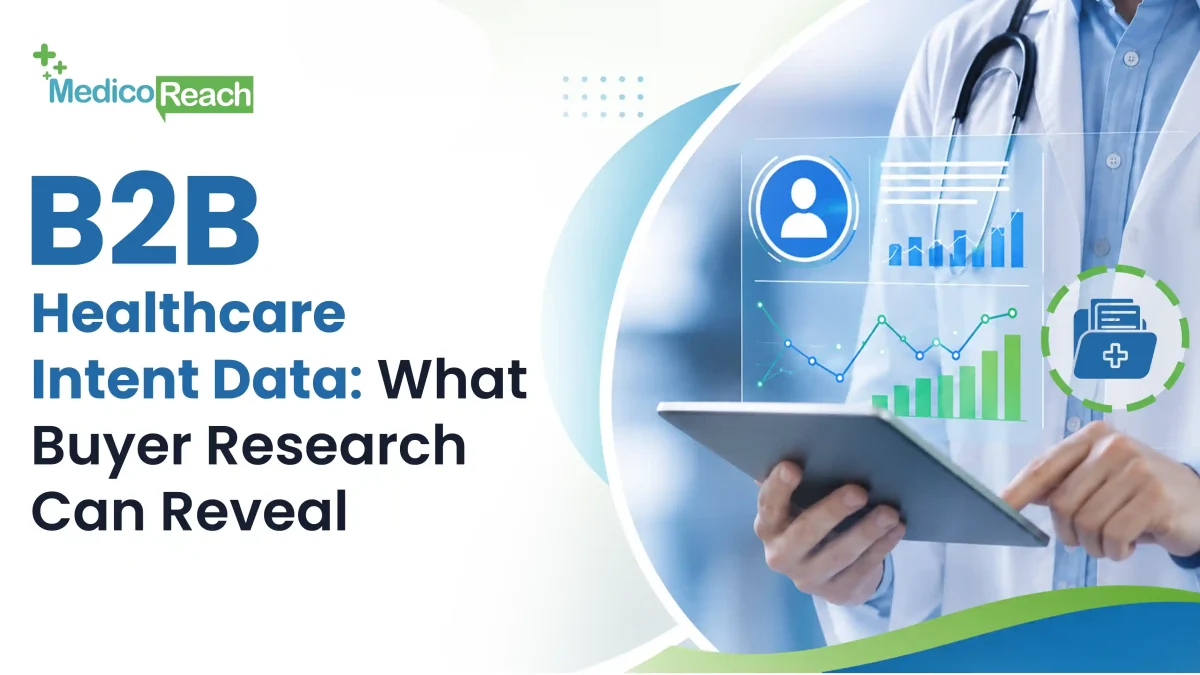
Healthcare buying rarely starts with a sales conversation. Teams may research a technology, compare solutions, investigate a clinical category, or explore an operational problem before contacting a vendor. A healthcare contact database can show which organizations and professionals fit a market, but it does not necessarily show what those accounts are researching. B2B healthcare intent data adds that behavioral context, connecting relevant research activity with accounts and, where available, the people and functions involved. The point is not to treat every signal as a buying decision, but to give marketing and sales another piece of evidence when deciding where to focus.
What is Healthcare Intent Data?
Healthcare intent data is information about research behavior that may indicate intent data signals in healthcare topics, products, technology, or business problems. Depending on its source, that activity may include content engagement, searches, website visits, or research across industry resources. The useful signal is the pattern and relevance of the activity, rather than one isolated interaction. An account repeatedly researching a topic related to your offering may warrant a closer look than one that only matches your target profile. Intent indicates research interest; it does not confirm a purchase, budget, decision, or buying timeline.
From Healthcare Research to an Account-Level Intent Signal
How does healthcare intent data work once research activity is detected? The process starts by connecting activity to a relevant topic, such as cybersecurity, EHR integration, medical equipment, or revenue-cycle technology. Frequency, freshness, and research patterns can then help distinguish sustained interest from an isolated interaction.
Next comes the account. Which healthcare organization is behind the activity, and does it fit the market being targeted? The topic can also provide clues about the people involved. Medical-device research may involve clinical leaders and procurement, while cybersecurity activity may point toward IT or security teams.
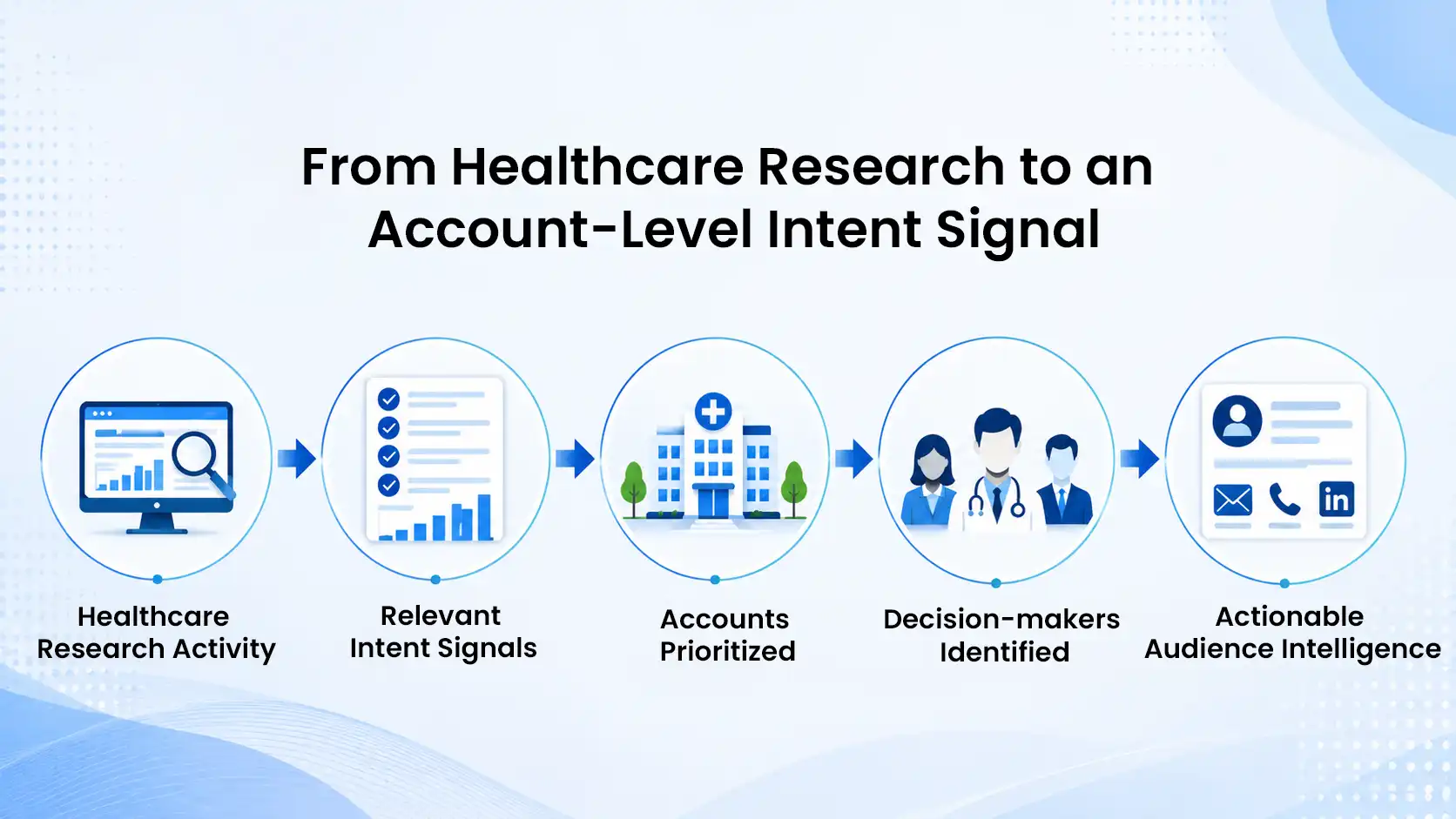
The important distinction remains: intent data indicates research activity, not a guaranteed purchase.
Where Does Healthcare Intent Data Come From?
Intent signals can come from different parts of the digital journey. First-party intent comes from a company’s own properties, including website activity, content engagement, and email interactions. Second-party intent is another organization’s first-party data shared through a partner, such as a publisher or industry journal. Third-party intent uses external sources to identify broader patterns of research activity.
For healthcare marketers, that broader view matters, and it is how healthcare intent data is collected. A hospital researching capital equipment may never visit a vendor’s website, while clinicians may research device categories through several industry resources. The source therefore affects what part of the research journey is visible.
Why Research Context Changes Healthcare Account Priorities
A healthcare database can show which hospitals, health systems, medical companies, or professionals fit a target market. Intent adds another question: which of those accounts appear to be researching a relevant problem?
That context can affect prioritization. A good-fit account showing recent, relevant activity with decent healthcare account intent scoring may warrant more attention than an account that matches the ICP on paper but shows no comparable research. In healthcare, where decisions can involve clinical, IT, procurement, finance, and operations teams, the research topic can also give marketing and sales a more useful starting point.
Healthcare Intent Data vs Healthcare Email List: Who vs. What
A healthcare contact database answers who: the organizations, professionals, roles, specialties, locations, and other attributes in your addressable market. Intent data answers what those accounts appear to be researching.
The two are complementary. Contact data provides the audience foundation; intent adds behavioral context that can help determine where attention may be warranted. Together, they give teams a fuller view than either data type provides alone.
Turning Healthcare Intent Signals Into Marketing Priorities
Intent becomes useful when it changes how teams handle their target accounts.
- Reach potential buyers earlier: Research can begin before an organization contacts a vendor.
- Prioritize accounts: Combine intent with ICP fit and account data to distinguish active research from simple profile matches.
- Make outreach more relevant: Research around EHR integration calls for a different conversation than interest in cybersecurity or RCM.
- Align sales and marketing: Give both teams a shared signal for deciding which accounts deserve attention.
- Improve campaign targeting: Use research topics to inform email, paid media, content, and demand-generation audiences.
- Find more of the buying group: Related activity from multiple people at one account can provide more context than a single contact.
- Revisit inactive opportunities: New research activity can give sales a reason to reassess an account that previously went quiet.
Putting Healthcare Intent Data Into Practice
When considering how to use intent data in healthcare marketing, start by defining the accounts you want to reach and the topics that indicate meaningful research. Identify the topics that would indicate meaningful research, then connect those signals with existing account and contact data. From there, decide how the information will influence account prioritization, campaigns, or sales follow-up.
Conclusion
Healthcare contact data shows who is in your market. Intent data adds context about what those organizations appear to be researching. Used together, they give marketing and sales teams another signal for deciding which accounts deserve attention, what topics may matter, and when an existing account may be worth revisiting.