Introduction
Generating a high volume of leads looks good on paper, but it can drain resources when prospects lack the intent or readiness to move forward. Building a predictable sales pipeline requires prioritizing lead quality over quantity.
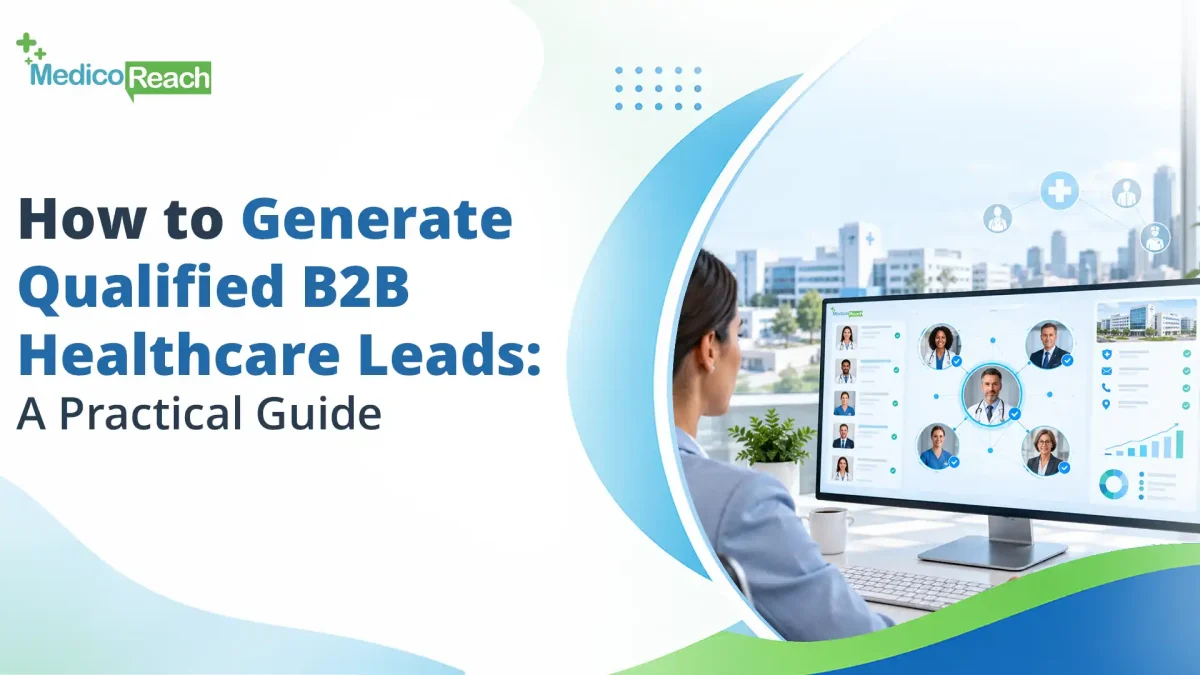
To generate qualified B2B healthcare leads, start by defining the ideal customer profile (ICP) and evaluating prospects based on their business needs, budget, purchasing authority, and readiness to buy. Since healthcare purchasing decisions often involve multiple stakeholders, identifying relevant decision-makers and influencers is equally important.
Once the qualification criteria are established, use audience segmentation to prioritize high-potential prospects and engage them through relevant outreach channels. This approach helps sales and marketing teams focus their efforts on opportunities more likely to progress through the pipeline.
This guide explains how to identify, qualify, and engage healthcare prospects to build a more productive B2B sales pipeline.
What Makes a B2B Healthcare Lead Qualified?
The criteria for well-qualified B2B healthcare leads include:
- ICP fit: The ideal customer profile represents prospects who will gain the maximum value and highest returns from your offerings. It describes the characteristics of best-fit accounts.
- Demonstrated intent: The prospect exhibits purchasing behavior, such as an active infrastructure upgrade, a new facility opening, or a budget cycle.
- Compliance and Security Readiness: The organization must acknowledge and have the infrastructure to adhere to stringent standards like HIPAA and data security.
- Budget and Authority: The buying committee holds financial autonomy over projects.
- Stakeholder Map: Navigate multiple decision-makers across IT, finance, clinical operations, and administration, each validating different purchases based on their responsibilities.
5 Steps to Generate Qualified B2B Healthcare Leads
1. Define Your Healthcare ICP
Clear targeting is key to generating qualified B2B healthcare sales leads. Detailed information about prospects makes it easier to create a framework. Hence, developing a clear ICP provides a stronger foundation for targeting. It typically includes attributes about the organization as well as the buying committee, such as
- Industry: Healthcare, Pharmaceuticals, Biotechnology, MedTech, HealthTech, Health Insurance, etc.
- Organization type: Acute care hospitals, outpatient clinics, long-term nursing homes, ambulatory surgical centers.
- Geography: Country, Region, City, State, and ZIP code.
- Organization/facility size: Measured by total employee count, bed count, or number of active physicians practicing
- Specialty: Neurology, Cardiology, Gynecology, Pediatrics, Emergency Medicine, Oncology, and so on
- Buyer role: C-suite (CEO, CFO, CIO, CMO), department directors (director of nursing, pharmacy head), procurement managers, etc.
- Technology environment: Relevant software platforms, infrastructure, systems, or technologies already in use.
2. Map the Right Decision-Makers
Next, identify the relevant stakeholders who influence the purchasing decision. Determine each stakeholder’s responsibilities and authority within their department. For example, a healthcare supply chain director oversees the procurement of medical supplies in bulk. Further, clarify the roles of healthcare decision-makers and identify those with the authority to approve, influence, or block a decision. Engage relevant stakeholders through a coordinated, multi-threaded approach.
| Healthcare Decision-Makers | Outcomes They Care About | Solutions Or Product Categories They May Evaluate | Content To Engage Them |
| Clinical Leaders | – Patient outcomes
– Clinician burnout – Clinical data |
– Medical devices & implants
– Pharmaceutical drugs and biologics |
– Before and after workflow diagrams
– Peer-reviewed studies |
| IT Directors | – Data security
– EHR integration – System maintenance – Enterprise software |
– Enterprise software
– Cybersecurity solutions |
– Security compliance documents
– 30-day implementation blueprints |
| Supply Chain Directors | -Vendor reliability
-Total cost of ownership |
– Commodity medical supplies
– Office supplies |
-ROI spreadsheets
-Logistics briefs |
| Finance Leaders | – Operating margins & cash flow
– Time to ROI |
– Revenue cycle management software
– Enterprise resource planning software |
– Cost-benefit reports
– Financial impact models |
3. Build and Verify Your Healthcare Lead Database
When building a lead, choose the data fields that matter for outreach. Collect data points such as names, precise roles and organizations, and layer in additional industry context like organization type, business challenges, software stack, and other relevant insights.
Further, verify all emails to eliminate bounces and review collected data and related information across multiple sources. Clean the data thoroughly every 60-90 days by removing duplicates and updating missing fields.
4. Segment B2B Healthcare Leads Before Outreach
Lead segmentation categorizes prospects into separate groups based on fit, interest, behavioral engagement, and role. This strategy allows us to engage segments with personalized content that matches their interests. The segmentation filters in B2B healthcare:
- Role: Chief information officer, chief nursing officer, chief financial officer, chief compliance officer
- Specialty: Anesthesiology, Orthopedic Surgery, General Surgery
- Organization: Academic medical centers, Federally Qualified Health Centers, post-acute, and long-term care
- Geography: State, Country
- Account tier: Tier-1 (Enterprise-level accounts with 50+ clinical locations), Tier-2 (Mid-market level with 10-20 clinical locations), Tier-3 (Commercial level with 5 locations)
- Use case: Clinical workflow optimization, revenue cycle management, patient engagement
5. Match Outreach to the Buyer
Personalize outreach by referencing the specific challenge a B2B healthcare organization is trying to solve and the realities of their business. Use relevant assets such as case studies, industry insights, whitepapers, or legal updates where appropriate. An overly aggressive sales approach can reduce engagement in complex B2B healthcare buying cycles. An effective multi-channel outreach covers the following platforms:
- Email: Send brief, well-articulated emails incorporating clear, role-relevant, and industry-appropriate language, highly segmented by role.
- LinkedIn: Send personalized messages and engage through relevant social interaction.
- Phone: Use calls to quickly reach professionals, book meetings, and build relationships.
- Events/webinars: Feature clinical experts and highlight outcomes of previous clients.
How to Know Whether Your B2B Healthcare Lead Generation Is Working
To assess progress or improve tactics to enhance the lead generation process, KPIs are tracked. Analyzing campaign strategy identifies areas of improvement, such as messaging, follow-up sequences, or subject lines.
KPIs to track when evaluating the B2B healthcare lead generation process include:
Early stage
- Deliverability: The ability of emails to land in the recipient’s inbox is known as deliverability. Sender reputation, email authentication, subscriber engagement, and list quality impact deliverability. High deliverability indicates the correctness and validity of the data.
- Open rate: The percentage of emails that are opened. This metric reflects the effectiveness of the subject line and typically appeals to the top-of-funnel traffic.
- Response rate: The number of recipients who reply to your emails and ads. This demonstrates the level of interest and possible conversions.
Pipeline
- Leads: Determines if a prospect is likely to engage based on present needs, affordability, level of interest, and ability to influence the purchase.
- Meetings: Discovery calls, demo sessions, and consultations show signs of moving beyond initial engagement to active sales discussion.
- Opportunities: Measures the number of qualified healthcare leads that progress into sales opportunities, giving insight into the effectiveness of the B2B healthcare lead generation process.
Revenue
- Pipeline generated: The total potential revenue value associated with qualified sales opportunities created through the campaign.
- Opportunity conversion rate: Tracks the percentage of opportunities that become closer to closing a sale. This metric links the healthcare lead-generation process with sales results.
- Customer acquisition cost: Measures the cost of acquiring a new customer. Comparing CAC to customer value helps determine whether your lead-generation strategy is commercially sustainable.
The lead generation process depends on relevance, qualification, engagement, and the ability of the lead to move through the sales process successfully. A high volume of leads does not necessarily signify strong lead-generation performance if they’re irrelevant and don’t fit, while a smaller number of well-qualified B2B healthcare leads can generate better pipeline value.
Conclusion
A healthy sales pipeline requires qualified leads with genuine purchasing potential rather than a high volume of leads. Marketers can generate qualified B2B healthcare leads by developing an ICP and aligning outreach with the clinical, operational, or financial outcomes their prospects care about. Measuring early-stage pipeline performance and revenue metrics helps identify high-value opportunities with a greater likelihood of conversion. This approach builds a productive sales pipeline and supports long-term retention.